


 中文 (中国)
 Deutsch
 Français
 Italiano
 Español
 Português
 العربية
 Русский
 日本語
日本語 한국어
한국어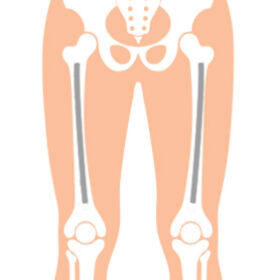 Fully Internal System
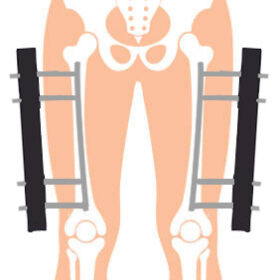 External Device System
 Before After Simulator
 Patient Portal
 Surgery Process
 Success Stories
 LL Surgery Packages
 Our Doctor
 Our Team
 Our Mission
 About Us
 Patient Care Guides
 Affiliate Program
 Activities in Istanbul


Limb Lengthening Surgery Risks: Side Effects, Complications, and the Recovery Burden Patients Underestimate
Many people start researching limb lengthening with one question: can it work? The harder question, and usually the more important one, is this: what can go wrong, and how much recovery can I realistically handle?
That matters because limb lengthening is not a simple height procedure. It is major orthopedic reconstruction. Bone is cut, slowly distracted, and then asked to heal while muscles, tendons, nerves, joints, and daily life all absorb the stress of that process.
Even in successful cases, patients should expect pain, stiffness, swelling, mobility limits, and a long follow-up period. So when people search for limb lengthening surgery risks, the real goal is not just to find a list of complications. It is to understand which problems are expected, which need close management, which are rare but serious, and how much the recovery burden changes the true risk profile.
Quick answer
The risk of limb lengthening surgery is not limited to the operating room. Expected side effects include pain, soreness, swelling, limited mobility, and muscle tightness. True complications include infection, joint contracture, delayed bone healing, malalignment, and hardware problems. Rare but serious events can include blood clots, anesthesia complications, and nerve or blood vessel injury. Just as important, months of physical therapy, imaging, stretching, and activity restrictions are part of risk management, not an optional extra.
Expected side effects vs true complications: the first distinction patients need
One reason the risks of limb lengthening surgery are often misunderstood is that people mix together three very different things: normal recovery effects, complications that require close treatment, and serious red-flag problems.
Expected side effects
Pain, swelling, bruising, soreness, fatigue, limited walking, and muscle tightness are common. These do not mean the procedure has failed. They are part of the normal stress of surgery and distraction.
Complications
Infection, joint stiffness, contracture, delayed bone healing, premature consolidation, malalignment, hardware trouble, or the need for revision surgery are not routine inconveniences. They need active monitoring and management.
Serious red flags
Nerve injury, blood vessel injury, blood clots, severe wound problems, and anesthesia-related events are less common, but they are the situations patients must take seriously and report quickly.
This framework helps answer a common fear in plain English. Limb lengthening surgery side effects are not the same thing as complications, and complications are not all equal in severity. But none of them should be minimized when you are deciding whether surgery is worth it.
The most important limb lengthening surgery risks to understand
If you want the short list of the most important limb lengthening surgery risks, start here.
1. Infection
Any surgery carries infection risk, but the pattern changes by device type. With external fixators, the pins or wires pass through the skin, which creates a daily pin-site care burden and a higher chance of superficial or deeper infection. With internal nails, there is less external wound burden after the incisions heal, but infection still remains possible.
Minor infections may respond to local care and antibiotics. More serious infections can delay progress, threaten bone healing, or require additional procedures.
2. Joint stiffness and contracture
This is one of the most underestimated complications. As the bone is lengthened, surrounding muscles, tendons, and joint capsules are stretched. If they do not keep up, the joint can become stiff, painful, or pulled into a limited position. A contracture means the joint no longer moves normally because soft tissues have tightened too much.
Patients often focus on bone healing and forget that preserving motion is just as important. Loss of range of motion can affect walking, sitting, training, and final function even if the bone itself lengthens as planned.
3. Poor bone healing
The new bone forming in the gap must be strong enough and biologically active enough to consolidate. Problems can happen in several directions:
- Delayed union: the bone heals more slowly than expected
- Nonunion: the bone fails to heal adequately
- Premature consolidation: the bone hardens too early, making further lengthening difficult or impossible without another procedure
- Failure to reach target length: treatment may stop before the planned gain is achieved
This is one of the most serious leg lengthening surgery side effects to understand because it can prolong the timeline by months or lead to bone grafting, adjustment of the plan, or revision surgery.
4. Nerve, muscle, and soft-tissue injury
Lengthening stresses more than bone. Nerves can become irritated or stretched, and muscles may tighten or weaken. Symptoms can include numbness, tingling, burning pain, weakness, or loss of control. Some symptoms improve when distraction is adjusted or slowed. Others may be more persistent.
Soft-tissue problems are part of the reason patients sometimes underestimate the risk of limb lengthening surgery. The operation is not only about making bone longer. It is about whether the whole limb can tolerate that change safely.
5. Alignment and length problems
The bone can drift, angle, rotate, or fail to match the intended correction. Undercorrection, overcorrection, or deformity can affect both appearance and function. Even small alignment errors can matter when they change joint loading or gait mechanics.
This is why repeated imaging is essential. Monitoring is not administrative paperwork. It is how problems are caught before they become larger ones.
6. Hardware failure or need for revision surgery
Devices can loosen, bend, break, malfunction, or stop performing as expected. With external frames, patients may also face frame-related inconvenience, skin irritation, and care challenges. With internal nails, device-related issues can still occur, and some patients need reoperation to correct a mechanical or healing problem.
In other words, newer technology does not make limb lengthening surgery risk-free. It changes the pattern of risk; it does not erase it.
Why stiffness and bone-healing problems matter more than many patients expect
If two complications deserve extra attention before you decide on surgery, they are stiffness and poor bone healing.
During distraction, the body is being asked to adapt in real time. Bone is slowly separating. Muscles, tendons, fascia, nerves, and joints must lengthen or tolerate new tension. That is why a technically successful operation can still produce a difficult recovery if the patient loses motion.
Range-of-motion loss is not a cosmetic issue. It can affect how well you walk, how comfortably you sit, whether you can bear weight properly later, and how satisfied you feel with the result. Some patients think pain is the main recovery challenge. Very often, stiffness is the more stubborn problem.
Bone-healing problems also carry more weight than many people realize. If regenerate bone is weak, sparse, or slow to consolidate, the entire timeline stretches out. Restrictions remain in place longer. Anxiety rises. Costs can climb. Additional procedures may be needed. In difficult cases, the final length goal may need to be reduced or abandoned.
That is why experienced planning always treats physical therapy, rate of distraction, follow-up imaging, and patient compliance as part of medical safety, not as optional extras after surgery.
How risks differ between internal nails and external fixators
One of the most common pre-decision questions is whether internal nails are safer than external fixators. The honest answer is more nuanced than a simple yes or no.
External fixators have a longer visible burden. Pins or wires cross the skin, so pin-site irritation and infection are ongoing concerns. The frame can be cumbersome, hygiene is more involved, scarring is usually greater, and daily life can feel more disrupted. Frame management itself becomes part of treatment.
Internal nails usually reduce the external wound and pin-site burden after surgery. That can improve comfort and convenience for many patients. But internal systems still carry important risks, including poor bone healing, device malfunction or failure, malalignment, restricted weight bearing, and the possibility of reoperation.
Neither method makes surgery easy. Neither method removes the biological risks of distraction. Patients still need careful follow-up, repeated imaging, stretching, physical therapy, and strict adherence to restrictions. The recovery demands remain high no matter which device is used.
So are internal nails safer than external fixators? In many cases they may reduce some external-fixator-specific burdens, especially pin-site problems and frame-related inconvenience. But the core risks of limb lengthening surgery remain: stiffness, bone-healing issues, alignment concerns, soft-tissue strain, and the potential need for another procedure.
The recovery burden is part of the risk profile
Many patients separate surgery risk from recovery burden. That is a mistake. In limb lengthening, recovery burden is part of the risk.
This is usually a months-long process, not a one-time event. Patients typically need frequent follow-up visits, repeated imaging, careful monitoring of bone formation, and ongoing adjustments to activity.
Why rehab matters medically
Daily stretching and physical therapy help reduce the risk of joint stiffness, contracture, gait changes, and soft-tissue imbalance. Missed rehab is not just slower progress. It can directly worsen the final outcome.
Why follow-up matters medically
Imaging and review appointments help detect delayed healing, early consolidation, alignment drift, or hardware issues before they become harder to fix. Monitoring is part of the treatment itself.
Weight-bearing limits and activity restrictions can last longer than people expect. Work, travel, training, sleep, and daily independence may all change for a period of time. Pain management can be demanding. Mobility aids may be necessary. Emotional strain is common, especially when progress feels slower than planned.
This practical burden is one reason the risks of limb lengthening surgery should never be judged only by the complication list. A patient may avoid a major complication and still find the recovery far more disruptive than expected.
If you want a broader overview of the topic, this page on understanding the risks and complications of limb lengthening surgery expands on the overall picture. And because prolonged recovery, rehab, and possible setbacks can affect planning, it is also wise to review the additional costs to consider for limb lengthening surgery.
Who may face higher risk or need more caution
Not every patient starts from the same baseline. The risk of limb lengthening surgery can vary based on overall health, smoking status, circulation, bone quality, age, prior deformity, nutritional status, and how reliably the patient can follow instructions.
Smoking and poor health habits can interfere with bone healing. Weak bone quality can make fixation and consolidation more challenging. Limited flexibility before surgery can make stiffness more likely. A patient with poor follow-up habits may miss the early warning signs of a correctable problem.
One important point is often overlooked: cosmetic and medically necessary cases share the same biology. The bone does not care why it is being lengthened. The soft tissues do not care whether the goal is functional correction or height gain. The same core complications can happen in both settings.
That means being a good candidate is not only about qualifying medically. It is also about whether you can commit to the full process: rehab, follow-up, restrictions, patience, and problem-solving over time.
When should patients worry most?
Some discomfort and stiffness are expected. But certain changes deserve prompt attention: worsening numbness, new weakness, severe increasing pain, unusual swelling, signs of infection, sudden changes in alignment, trouble moving the joint compared with prior days, or anything that suggests the limb is becoming less functional rather than gradually improving.
Patients researching limb lengthening surgery side effects should understand this clearly: the safest recoveries usually come from early reporting, close monitoring, and disciplined rehabilitation. Waiting too long to mention a concern can turn a manageable issue into a larger one.
FAQ: what are the risks of limb lengthening surgery?
The main limb lengthening surgery risks include infection, joint stiffness, contracture, delayed bone healing, nonunion, premature consolidation, malalignment, nerve or soft-tissue injury, hardware problems, blood clots, and the possible need for revision surgery. Common side effects such as pain, swelling, soreness, and limited mobility are also expected during recovery.
It can be. This is major orthopedic surgery, not a minor cosmetic procedure. Many patients do well with careful planning and strict follow-up, but the procedure is still serious and can lead to difficult complications or prolonged recovery. The real danger depends not only on the surgery itself, but on bone healing, rehab compliance, device behavior, and how quickly problems are identified.
The most common leg lengthening surgery side effects are pain, swelling, bruising, soreness, muscle tightness, fatigue, reduced mobility, and temporary difficulty walking or performing normal daily tasks. These are different from complications, but they can still be intense and last longer than many patients expect.
Internal nails may reduce some external-fixator-specific problems, especially pin-site infection burden and frame inconvenience. But they do not remove the main risks of limb lengthening surgery. Bone-healing problems, stiffness, alignment issues, device failure, and reoperation can still occur. So the better question is not which method is risk-free, but which risk pattern is more appropriate for a specific patient.
Yes, permanent problems are possible in a minority of cases. These can include lasting stiffness, chronic pain, persistent numbness, weakness, gait changes, deformity, or incomplete achievement of the planned length. That possibility is one reason this decision should be approached with caution and realistic expectations.
For a shorter companion answer page, see what are the risks associated with limb lengthening surgery.
Bottom line
Limb lengthening surgery risks are often underestimated because people focus on the goal and not the process. But this is a long, demanding treatment in which success depends on far more than getting through the operation.
The best way to think about the decision is simple: expect side effects, respect complications, and take the recovery burden seriously. Pain, swelling, and limited mobility are common. Infection, stiffness, poor bone healing, alignment problems, and hardware issues are the complications that most often shape the real experience. Rare but serious problems can happen, and some patients require more procedures than they anticipated.
So is it worth it? That depends less on whether lengthening is technically possible and more on whether you understand the risks of limb lengthening surgery clearly enough to accept the biology, the uncertainty, and the months of disciplined recovery that come with it.
Are you interested in limb lengthening surgery?
We would be happy to assist you.
Go to homepage Limb Lengthening Process Gallery