


 中文 (中国)
 Deutsch
 Français
 Italiano
 Español
 Português
 العربية
 Русский
 日本語
日本語 한국어
한국어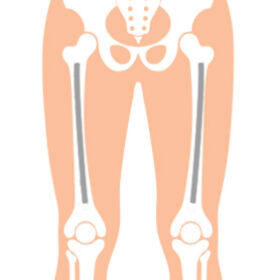 Fully Internal System
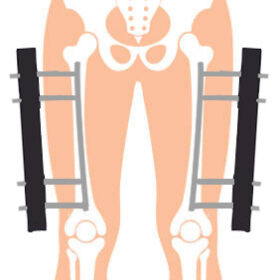 External Device System
 Before After Simulator
 Patient Portal
 Surgery Process
 Success Stories
 LL Surgery Packages
 Our Doctor
 Our Team
 Our Mission
 About Us
 Patient Care Guides
 Affiliate Program
 Activities in Istanbul


FITBONE Limb Lengthening: How the Internal Nail Works, Risks, Recovery, and Candidacy
For many patients, the idea of gaining height or correcting a shorter leg sounds simple: place a device, lengthen the bone, recover, and move on. In reality, FITBONE limb lengthening is not a shortcut. It is planned bone reconstruction.
The FITBONE system can be used for gradual femur or tibia lengthening in selected patients. That may include people with limb length discrepancy, congenital or post-traumatic shortening, certain deformities, or carefully screened cosmetic height goals.
But the device is only one part of the outcome. The surgical plan, bone alignment, soft-tissue flexibility, rehabilitation, X-ray monitoring, and patient compliance all matter. A well-chosen implant cannot compensate for unsafe lengthening goals or poor follow-up.
Quick answer
FITBONE is a fully implantable motorized nail placed inside the bone to gradually lengthen the femur or tibia after a controlled bone cut. It avoids the external frame used in traditional fixation, but it is still major orthopedic surgery with months of rehabilitation, monitoring, and possible complications.
What Is FITBONE?
FITBONE is a fully implantable motorized intramedullary lengthening nail. “Intramedullary” means the device sits inside the central canal of a long bone, usually the femur or tibia.
In plain language, the FITBONE nail is an internal rod that can gradually extend after surgery. The FITBONE implant is placed inside the bone rather than outside the leg, so there are no external rings, pins, or bars during the lengthening phase.
FITBONE limb lengthening works through a biological process called distraction osteogenesis. The bone is cut in a controlled way, the two bone segments are slowly separated, and the body forms new bone in the gap.
This is why the procedure is not simply “stretching the leg.” It is a coordinated process involving bone healing, muscle adaptation, joint protection, nerve monitoring, and careful pacing.
For a device-focused introduction, you can also read the FITBONE treatment overview.
How the FITBONE Method Works
The FITBONE method combines surgical planning, internal mechanical lengthening, and the body’s natural bone-healing response.
1. Controlled bone cut
The surgeon performs an osteotomy, which is a planned cut through the bone. This creates two bone segments that can be gradually separated.
2. Gradual lengthening
The internal actuator inside the nail slowly lengthens the bone according to the prescribed schedule. Follow-up X-rays guide the pace.
3. Bone consolidation
After the target length is reached, the new bone must harden and strengthen before normal activity can safely resume.
Most patients think first about the lengthening phase, but consolidation is just as important. If the new bone is weak, delayed, or poorly formed, weight-bearing and activity may need to be restricted for longer.
What Happens During FITBONE Surgery?
FITBONE surgery starts long before the operating room. A safe plan requires detailed assessment of the full limb, not just the bone that will be lengthened.
Preoperative planning
Planning usually includes measurements of limb length, bone alignment, joint position, bone diameter, and soft-tissue condition. The surgeon also reviews medical history, medications, previous surgeries, smoking status, bone health, and expectations.
For cosmetic height surgery, screening is especially important. The question is not only “Can the bone be lengthened?” but “Can this patient safely tolerate the full treatment journey?”
Implant placement
During surgery, the FITBONE nail is inserted into the femur or tibia. The exact approach depends on the bone being treated, the patient’s anatomy, and the correction plan.
The surgeon performs the osteotomy, positions the implant, checks alignment, and tests the device. Additional procedures may be needed if deformity correction, joint protection, or soft-tissue balancing is part of the plan.
Early hospital recovery
After surgery, pain control, wound care, swelling management, and early movement are priorities. Patients are taught how to protect the limb, use walking aids, and follow the lengthening schedule when it begins.
Education at this stage matters. Mistakes with weight-bearing, missed therapy, or ignoring nerve symptoms can affect the final result.
Recovery Timeline: Distraction, Rehabilitation, and Consolidation
Recovery after FITBONE limb lengthening happens in stages. Timelines vary, but the overall pattern is usually similar.
Some surgeons use a short latency period before lengthening begins. This allows the early healing response to start after the osteotomy. During this time, patients focus on pain control, safe mobility, swelling reduction, and gentle exercises.
Lengthening is gradual. A common concept is around 1 mm per day, although the exact pace depends on the bone, soft tissues, X-ray appearance, symptoms, and surgeon protocol. Going faster is not automatically better and may increase complications.
Physiotherapy is essential. The goal is to maintain knee, hip, and ankle motion while protecting muscles, tendons, and nerves from excessive tightness. Stretching, strengthening, gait training, and joint monitoring are ongoing parts of treatment.
Once lengthening stops, the new bone must harden. This can take months. Weight-bearing restrictions depend on the bone treated, the implant, regenerate bone quality, and the surgeon’s instructions.
In many cases, removal of the FITBONE implant may be recommended after the bone has fully healed. Timing varies and should be discussed before treatment so patients understand the full surgical pathway.
Patients should expect frequent follow-up visits and X-rays during active lengthening. These checks are not optional. They help identify poor regenerate bone, alignment changes, joint stiffness, or nerve irritation early enough to adjust the plan.
Potential Benefits of FITBONE Limb Lengthening
The main attraction of FITBONE is that lengthening happens with an internal nail rather than an external frame. For many patients, this can make daily life more manageable during treatment.
Possible advantages
- No external frame during the lengthening phase
- No pin-site infections associated with external fixator pins
- Improved comfort and clothing fit compared with bulky frames
- Less external hardware to manage in daily hygiene and mobility
- Accurate gradual lengthening when used with careful planning and monitoring
- Use in selected reconstructive and cosmetic cases
What benefits do not mean
- Not scar-free
- Not painless
- Not risk-free
- Not a guarantee of a specific height increase
- Not a replacement for physiotherapy
- Not suitable for every patient or every bone shape
The internal design can reduce some problems linked with external frames, but it does not remove the biological limits of bone, muscle, nerves, and joints.
Risks, Limitations, and Complications to Discuss Before Treatment
A trustworthy FITBONE surgery consultation should include complications, not just expected height gain. Internal lengthening nails are advanced tools, but every limb lengthening method carries risk.
Key safety point
More length is not always safer or better. Aggressive lengthening goals can increase the risk of stiffness, nerve symptoms, delayed healing, poor bone formation, and long-term functional problems.
Possible complications include:
- Pain and stiffness: Muscles and joints must adapt as the bone lengthens. Knee, hip, or ankle stiffness can limit function if not addressed early.
- Muscle tightness: Tight hamstrings, quadriceps, hip flexors, calves, or Achilles tendon tension may develop depending on the bone lengthened.
- Delayed bone healing: The regenerate bone may form slowly or appear weak on X-ray, requiring slower lengthening, longer protection, or additional treatment.
- Malalignment: Bone segments can drift if alignment is not controlled or if the biology and mechanics are unfavorable.
- Fracture risk: Weak regenerate bone or premature loading can increase fracture risk.
- Nerve irritation: Numbness, tingling, burning pain, or weakness may occur if nerves are stretched or compressed.
- Soft-tissue problems: Tendons, muscles, skin, and joints may struggle to adapt, especially with larger lengthening targets.
- Device-related issues: Mechanical or technical problems can occur and may require adjustment or reoperation.
- General surgical risks: Infection, blood clots, bleeding, wound issues, and anesthesia-related risks must be considered.
These risks do not mean FITBONE limb lengthening is inappropriate. They mean patient selection, planning, and follow-up must be taken seriously.
Who May Be a Candidate for FITBONE?
A good candidate is not defined only by wanting longer legs. Candidacy depends on anatomy, health, goals, and the ability to complete months of treatment.
May be considered
- Limb length discrepancy affecting gait, posture, or function
- Shortening after trauma or previous bone injury
- Selected congenital differences
- Some deformity correction cases
- Carefully screened cosmetic height goals
- Patients able to attend follow-up and physiotherapy consistently
May need caution
- Unrealistic expectations about pain, speed, or final height
- Poor joint motion before surgery
- Untreated medical conditions affecting healing
- Smoking or other factors that may slow bone repair
- Inability to follow weight-bearing restrictions
- Limited access to rehabilitation or follow-up imaging
For cosmetic patients, emotional readiness is also important. Limb lengthening changes the body slowly, and the process can be physically and mentally demanding.
FITBONE Compared With Other Limb Lengthening Options
Patients often compare FITBONE with other internal lengthening nails or with external fixation. The “best” method depends on the patient’s bone anatomy, target length, deformity, budget, availability, and risk profile.
External fixation remains useful in some complex corrections, but it involves pins or wires through the skin. Internal nails can be more comfortable and reduce pin-site problems, but they have their own device-specific limits and require suitable bone size and alignment.
For a broader method-by-method discussion, see this comparison of internal and external limb lengthening methods.
Fully internal motorized nail. Often valued for avoiding an external frame and allowing controlled gradual lengthening. Suitability depends on bone dimensions, treatment goals, soft tissues, and surgeon planning.
Other internal lengthening systems may use different activation mechanisms, weight-bearing rules, implant dimensions, and availability. The right choice is case-specific rather than brand-specific.
External frames can be helpful for complex deformity correction and certain reconstructive cases. They require more external hardware care and carry pin-site considerations, but they remain relevant in selected patients.
Questions to Ask Before Choosing FITBONE Limb Lengthening
A consultation should leave you with a realistic plan, not just a promised number of centimeters. Bring direct questions and expect direct answers.
- Am I a candidate for femur lengthening, tibia lengthening, or neither?
- What is a safe lengthening target for my anatomy and soft tissues?
- How will you monitor bone formation during distraction?
- What signs would make you slow down or stop lengthening?
- What are my weight-bearing restrictions and for how long?
- How often will I need physiotherapy?
- What complications are most relevant to my case?
- Will I likely need implant removal later?
- How will this plan affect work, travel, sports, and daily life?
FAQ About FITBONE Limb Lengthening
FITBONE can be a safe and effective option for selected patients when it is planned and monitored by an experienced limb-lengthening team. However, “safe” does not mean risk-free. Pain, stiffness, delayed bone healing, nerve symptoms, device issues, infection, blood clots, and reoperation are possible.
The possible amount depends on the bone being lengthened, soft-tissue tolerance, healing quality, alignment, and overall health. Some patients may be candidates for several centimeters, but aggressive goals can raise complication risk. A safe target should be individualized after imaging and physical examination.
Not automatically. FITBONE has important advantages as a fully implantable motorized nail, but device choice should be matched to the patient. Bone size, weight-bearing needs, deformity, target length, availability, and surgeon familiarity all influence the decision.
Yes, FITBONE may be considered for cosmetic height surgery in carefully selected adults. The evaluation should be strict because cosmetic patients still face the same surgical, bone-healing, nerve, joint, and rehabilitation risks as reconstructive patients.
Recovery usually takes months, not weeks. The active lengthening phase is followed by a consolidation phase while the new bone hardens. Return to full activity depends on X-ray healing, strength, joint motion, pain, and surgeon clearance. Implant removal may be discussed later after complete healing.
The Bottom Line
FITBONE limb lengthening is a sophisticated internal method for gradually lengthening bone, but it should be approached as reconstructive orthopedic surgery rather than a simple height procedure.
The FITBONE nail can offer meaningful advantages over external frames for selected patients, especially in comfort and daily management. Still, the final result depends on realistic goals, careful surgical planning, disciplined rehabilitation, regular X-ray monitoring, and early response to warning signs.
If you are considering the FITBONE implant, focus less on the biggest possible number and more on the safest plan for your bones, joints, muscles, nerves, and long-term function.
Are you interested in limb lengthening surgery?
We would be happy to assist you.
Go to homepage Limb Lengthening Process Gallery