


 中文 (中国)
 Deutsch
 Français
 Italiano
 Español
 Português
 العربية
 Русский
 日本語
日本語 한국어
한국어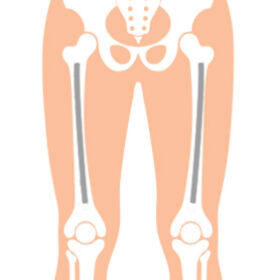 Fully Internal System
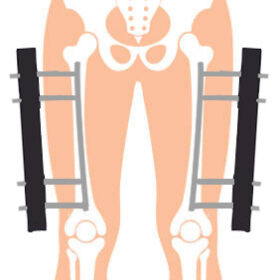 External Device System
 Before After Simulator
 Patient Portal
 Surgery Process
 Success Stories
 LL Surgery Packages
 Our Doctor
 Our Team
 Our Mission
 About Us
 Patient Care Guides
 Affiliate Program
 Activities in Istanbul


LON vs Precice 2 vs Fitbone: Which Limb Lengthening Option Fits Your Priorities?
Choosing a limb lengthening method can feel like comparing three keys that all open the same door, but change the entire journey once you step through it.
Many patients search for a single winner in LON vs Precice 2 vs Fitbone. The more useful question is different: which option best fits your anatomy, lengthening goal, comfort expectations, scarring concerns, risk tolerance, rehabilitation plan, and budget range?
All three approaches can gradually lengthen bone. The difference is not only in the surgical hardware. It is in daily life: how you move, how wounds are cared for, how visible the scars may be, how weight-bearing is managed, and what complications your surgical team must watch for.
This guide is a practical decision framework, not personal medical advice. The final choice should come after imaging, examination, planning, and a detailed discussion with an experienced limb lengthening surgeon.
Quick answer
LON may appeal to patients who can accept a temporary external fixator and higher scar/pin-site burden in exchange for a generally lower broad cost category. Precice 2 and Fitbone are fully internal nail systems that usually offer a more comfortable daily experience and fewer pin-related scars, but they have stricter implant, weight-bearing, follow-up, and cost considerations.
Quick Comparison: LON vs Precice 2 vs Fitbone at a Glance
The fastest way to understand the difference between LON Precice 2 and Fitbone is to separate the methods into two categories.
LON is a hybrid method: an internal nail is combined with a temporary external fixator during the lengthening phase. Precice 2 and Fitbone are fully internal lengthening nails, but they use different engineering to create gradual distraction.
LON
Hardware: internal nail plus temporary external fixator.
Main tradeoff: lower broad cost category, but more external-frame burden, pin-site care, and visible scarring risk.
Precice 2
Hardware: fully internal magnetic lengthening nail controlled from outside the body.
Main tradeoff: no external frame and generally better comfort, but strict weight-bearing and implant-size requirements.
Fitbone
Hardware: fully internal motorized nail using an implanted receiver/energy transmission system.
Main tradeoff: similar internal-nail lifestyle advantages, with device choice depending heavily on anatomy, planning, availability, and surgeon experience.
| Priority | LON | Precice 2 | Fitbone |
|---|---|---|---|
| External frame | Yes, temporarily | No | No |
| Control mechanism | External fixator adjustments during distraction | External magnetic controller | Internal motor with implanted receiver/energy transfer |
| Pin-site infection risk | Present because pins pass through skin | No external pin sites | No external pin sites |
| Visible scar burden | Usually higher due to pin sites | Usually lower than hybrid/external methods | Usually lower than hybrid/external methods |
| Daily comfort | More affected by the external frame | Often more comfortable than LON | Often more comfortable than LON |
| Weight-bearing | Depends on construct and surgeon protocol | Restricted; must follow nail limits | Restricted; must follow nail limits |
| Removal considerations | Frame removed after distraction; internal nail may later be removed | Nail removal may be recommended after consolidation | Nail removal may be recommended after consolidation |
| Broad cost position | Often lower than fully internal systems | Higher technology/device cost | Higher technology/device cost |
If you need a broader foundation before comparing devices, this overview of internal vs external limb lengthening methods can help clarify the basic categories.
The Core Difference: Hybrid External Fixation vs Fully Internal Nails
Most patient-facing tradeoffs come from one practical distinction: whether an external frame is part of your life during lengthening.
With LON, the bone is cut and gradually lengthened while an external fixator helps control the process. The fixator is attached through pins or wires that pass through the skin into bone. That creates pin sites, requires daily care, and can affect sleep, clothing, mobility, and social comfort.
With Precice 2 and Fitbone, the lengthening mechanism is inside the bone. There is no external frame. This generally reduces external-frame discomfort, pin-site infection concerns, and the number of visible pin-related scars.
However, fully internal does not mean easy. You still undergo bone surgery, months of bone regeneration, progressive soft-tissue stretching, physiotherapy, movement restrictions, and regular monitoring. Internal nails replace one set of problems with another set of engineering and rehabilitation requirements.
For readers who want to go deeper into this central split, see this related guide on hybrid vs fully internal limb lengthening.
Fully internal nails usually have the advantage because there is no external frame attached to the limb. Patients still experience pain, tightness, and fatigue, but daily tasks are often less mechanically awkward than with a frame.
Precice 2 and Fitbone generally reduce pin-site scarring because there are no external fixator pins. LON can leave more visible marks where pins or wires entered the skin.
LON often sits in a lower broad cost category than fully internal systems. The tradeoff is accepting more external hardware burden, pin-site care, and scar risk.
No method should be chosen on internet assumptions about walking sooner. Weight-bearing depends on bone segment, nail size, construct strength, bone healing, and the surgeon’s protocol.
LON: When a Hybrid Method May Still Make Sense
LON should not be dismissed simply because it uses an external fixator. In some settings, it remains a valid option when the patient understands the tradeoffs and the surgeon considers it appropriate.
Potential advantages of LON
The most common patient-facing advantage is broad cost positioning. Compared with fully internal nail systems, LON is often a more budget-tolerant category.
It is also a familiar technique for many surgeons. The external fixator allows direct mechanical control during the distraction phase, and for certain cases that may fit the surgical plan.
Potential disadvantages of LON
The external frame is the main burden. It can make sleeping, sitting, showering, dressing, transportation, and social life more difficult during the fixation period.
Pin-site care is another major difference. Because pins pass through skin, pin-site irritation and infection are specific concerns. Even when managed successfully, pin sites can leave visible scars.
LON may be a reasonable fit for patients who prioritize budget over comfort and are psychologically prepared for external fixation after proper medical evaluation.
Precice 2: What Patients Usually Like—and What They Must Understand
Precice 2 is a fully internal magnetic lengthening nail. After surgery, lengthening is performed gradually using an external remote controller that activates the nail mechanism through the skin.
For many patients, the appeal is obvious: no external frame. This usually means fewer pin-related scars, less visible hardware, and a more manageable daily routine compared with external or hybrid methods.
But the advantages come with conditions.
Key limitations to discuss
- Weight-bearing restrictions: internal nails have mechanical limits. Walking too much or too early can create risk.
- Device-size requirements: the bone canal must be suitable for the nail diameter and length.
- Implant-related complications: mechanical issues, distraction problems, or delayed bone healing can occur.
- Follow-up intensity: lengthening must be monitored carefully with clinical checks and imaging.
- Removal planning: implant removal may be recommended after the bone has fully consolidated.
If your decision has narrowed to LON and Precice 2, this focused LON vs PRECICE 2 comparison may help you prepare more targeted questions.
Fitbone: Similar Goal, Different Engineering
Fitbone is also a fully internal lengthening nail, but its engineering differs from Precice 2. Instead of magnetic activation, it uses an internal motorized system with an implanted receiver that transmits energy to the nail mechanism.
From the patient’s perspective, the broad lifestyle benefits are similar to other internal systems: no external fixator, no frame attached to the limb, fewer pin-site concerns, and usually less visible scar burden than LON.
The decision between Precice 2 and Fitbone is rarely a simple question of which device is universally better. It can depend on bone anatomy, nail dimensions, segment being lengthened, deformity correction needs, implant availability, planning requirements, and the surgeon’s experience with each system.
Published comparisons in selected patients suggest that Precice and Fitbone can produce broadly similar functional and radiographic outcomes, with complication profiles that overlap. In real consultations, that means the more important question is often whether a specific device suits your body and your surgical plan.
Safety and Complications: What Changes by Method?
Every limb lengthening method carries risk. The risk profile changes depending on whether the method uses external fixation, a fully internal nail, or a hybrid construct.
LON-specific concerns
- Pin-site irritation or infection
- External frame discomfort
- Soft-tissue irritation around pins
- More visible pin-related scarring
- Daily frame management and hygiene burden
- Potential stiffness from altered movement patterns
Internal nail concerns
- Mechanical or device-related problems
- Delayed bone consolidation
- Regenerate bone that forms too slowly or poorly
- Joint stiffness and reduced range of motion
- Nerve, muscle, or tendon tightness
- Strict weight-bearing limits during healing
Across all methods, safety depends on careful planning, gradual distraction, physiotherapy, nutrition, realistic length goals, and close monitoring. A good surgical plan should also include a complication plan: what happens if the bone heals too slowly, a joint becomes stiff, a nerve becomes irritated, or the device does not behave as expected?
A Patient-Priority Decision Matrix
Instead of asking which method is best, rank your priorities. This helps turn a vague comparison into a productive surgical consultation.
| Your priority | Method that may fit better | What to confirm in consultation |
|---|---|---|
| Lowest broad cost category | LON may be more suitable | Ask what external-frame period, wound care, and scar expectations are realistic. |
| Less visible hardware during recovery | Precice 2 or Fitbone | Ask whether your anatomy can accept a fully internal nail safely. |
| Fewer pin-site issues | Precice 2 or Fitbone | Ask about internal nail risks that replace pin-site risks. |
| Minimizing visible scars | Precice 2 or Fitbone | Ask where incisions will be and what scars typically look like. |
| Simpler daily hygiene | Precice 2 or Fitbone | Ask what daily care is required and when showering is allowed. |
| Higher confidence with surgeon’s preferred system | Depends on surgeon and case | Ask why that method is recommended for your specific bones and goal. |
Consult Checklist: Questions to Bring to Your Surgeon
A good consultation should not feel like choosing a product from a catalog. It should feel like building a plan around your anatomy, risks, and lifestyle.
Ask these before choosing
- Am I anatomically suitable for a fully internal nail?
- Which bone segment and nail size would be used?
- How much lengthening is realistic without raising nerve, muscle, or joint risk too much?
- What are my weight-bearing restrictions week by week?
- What complications are most likely with this method in my case?
- How often will imaging and follow-up be required?
- What physiotherapy schedule is expected?
- When would the fixator or nail be removed?
- If bone healing is delayed, what is the backup plan?
Common Scenarios: Which Option Might Fit?
These examples are not recommendations. They show how different priorities can point toward different discussions.
The budget-sensitive patient
This patient may be willing to accept a temporary external frame, more visible scars, and pin-site care if the overall plan is medically appropriate. LON may be part of the discussion.
The scar-conscious patient
This patient strongly wants to avoid pin-site marks and visible frame-related scarring. Precice 2 or Fitbone may better match that priority, if anatomy and planning allow.
The comfort-focused patient
This patient wants the least external hardware burden during daily life. Fully internal nails often align better with this goal, while still requiring serious rehabilitation.
The medically complex patient
This patient may need deformity correction, special planning, or has anatomy that limits device choice. The surgeon’s method recommendation may matter more than general online comparisons.
FAQ: LON vs Precice 2 vs Fitbone
There is no universal best method. LON may fit patients who accept external fixation tradeoffs and need a lower broad cost category. Precice 2 and Fitbone may fit patients who prioritize comfort, fewer pin-site scars, and no external frame. The better option depends on anatomy, lengthening goal, bone segment, risk tolerance, rehabilitation capacity, and surgeon planning.
LON combines an internal nail with a temporary external fixator. Precice 2 and Fitbone are fully internal lengthening nails. Precice 2 is magnetically controlled from outside the body, while Fitbone uses a motorized internal system with implanted energy transmission.
Usually, yes. Fully internal nails avoid external fixator pin sites, so they generally reduce pin-related scarring. They still require surgical incisions, so they are not scar-free.
Fully internal nails reduce certain risks linked to external fixation, especially pin-site problems and frame-related discomfort. But they introduce other concerns, including device mechanics, strict weight-bearing limits, delayed consolidation, and implant-related complications. Safety depends on patient selection, surgical planning, follow-up, and rehabilitation.
Fully internal nails often make daily life easier because there is no external frame. However, faster recovery is not guaranteed. Bone healing, soft-tissue flexibility, physiotherapy progress, pain control, and complication avoidance determine the real timeline.
Conclusion: Choose the Tradeoff You Can Live With
The real comparison in LON vs Precice 2 vs Fitbone is not a marketing contest. It is a tradeoff map.
LON may reduce broad device-related cost but asks more from the patient in external-frame tolerance, pin-site care, and scar acceptance. Precice 2 and Fitbone usually offer a cleaner daily experience with no external fixator, but they require suitable anatomy, careful weight-bearing control, close monitoring, and a higher technology commitment.
The best decision is the one that matches your body, your goal, and your ability to follow the recovery plan—not the one that sounds best in a simple online ranking.
Are you interested in limb lengthening surgery?
We would be happy to assist you.
Go to homepage Limb Lengthening Process Gallery