


 中文 (中国)
 Deutsch
 Français
 Italiano
 Español
 Português
 العربية
 Русский
 日本語
 한국어
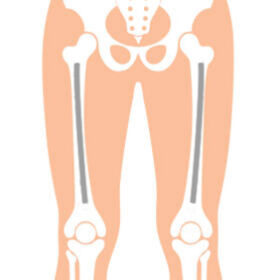 Fully Internal System
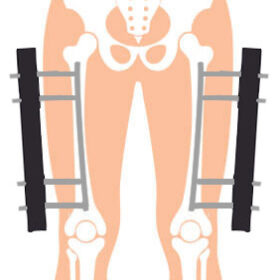 External Device System
 Before After Simulator
 Patient Portal
 Surgery Process
 Success Stories
 LL Surgery Packages
 Our Doctor
 Our Team
 Our Mission
 About Us
 Patient Care Guides
 Affiliate Program
 Activities in Istanbul


LON Method Explained: How Lengthening Over Nail Works, Benefits, Risks, and Recovery Tradeoffs
Most people who research limb lengthening eventually ask the same question: is there a way to spend less time in an external frame without choosing a fully internal lengthening system?
That is where the LON method often enters the conversation. It was developed as a compromise: part external fixator, part internal nail. For some patients, that hybrid design can reduce the time spent wearing a bulky external frame compared with classic external fixation alone.
But compromise does not mean shortcut. LON method limb lengthening is still major orthopedic surgery. It still involves bone cutting, gradual distraction, months of rehabilitation, careful follow-up, and real complication risks.
This guide explains what the LON method is, how Lengthening Over Nail works, why it is used, where it falls short, and what patients should understand before comparing it with other limb lengthening options.
Quick definition
LON means Lengthening Over Nail: an internal intramedullary nail is combined with an external fixator to lengthen bone.
Main advantage
The external frame is usually worn for less time than in external-fixator-only lengthening.
Main caution
Shorter frame time does not remove the need for physiotherapy, bone healing, infection control, and long-term monitoring.
What Is the LON Method?
The LON method, or Lengthening Over Nail, is a hybrid limb lengthening technique. It uses two forms of support at the same time: an external fixator outside the limb and an intramedullary nail placed inside the bone canal.
The external fixator controls gradual lengthening. The internal nail helps support the bone, maintain alignment, and protect the lengthened segment after the frame is removed.
The method may be used for limb-length discrepancy, certain deformity corrections, and, in carefully selected adults, cosmetic height surgery. Whether it is suitable for the femur, tibia, or both depends on anatomy, bone quality, soft-tissue condition, lengthening goals, and surgeon judgment.
For readers comparing several techniques, this broader guide to limb lengthening methods compared may also help place LON in context.
How Lengthening Over Nail Works Step by Step
Although every treatment plan is individualized, the basic principle of Lengthening Over Nail is consistent: the bone is separated in a controlled way, then slowly pulled apart so the body can create new bone in the gap.
1. Controlled osteotomy
The surgeon makes a precise surgical cut in the bone. This is called an osteotomy. It is not a fracture from trauma; it is a planned cut designed to allow controlled lengthening.
2. Nail placement
An intramedullary nail is inserted into the canal of the bone. This nail acts as an internal support structure during and after the lengthening process.
3. External fixator application
An external frame is attached to the bone through pins or wires. This frame remains outside the limb and is used to gradually distract, or pull apart, the bone segments.
4. Distraction phase
After a short waiting period, lengthening begins. The patient or care team adjusts the fixator at a prescribed rate. New bone, often called regenerate bone, forms in the widening gap.
5. Frame removal
When the planned length is reached and the limb is stable enough, the external fixator can usually be removed earlier than in classic external fixation alone.
6. Consolidation and rehabilitation
The internal nail continues to support the bone while the regenerate hardens. Physiotherapy, strengthening, gait training, and follow-up imaging remain essential.
Important point
Frame removal is a milestone, not the finish line. Bone consolidation, muscle recovery, joint mobility, and return to normal function can continue for months after the lengthening phase ends.
Why Surgeons Use the LON Method
The LON method exists because external fixation alone can require a long period in a frame. Long frame time can be uncomfortable, inconvenient, and psychologically demanding. It also means prolonged pin-site care and a longer period of restricted daily life.
By adding an internal nail, LON aims to reduce the duration of external fixation while preserving controlled gradual lengthening. The nail provides internal support after the external frame is removed, which can help maintain alignment while the new bone matures.
Potential advantages of LON method limb lengthening
- Shorter external fixator duration compared with classic external-fixator-only approaches.
- Internal support during the consolidation phase after frame removal.
- Possible improvement in comfort and mobility once the frame is removed, depending on the case.
- Useful hybrid option when a fully internal system is unsuitable, unavailable, or not preferred.
- Applicable to selected femur or tibia cases, depending on bone anatomy, goals, and surgical planning.
For a more detailed method-specific overview, readers can review the clinic’s Lengthening Over Nail LON method page.
LON vs Ilizarov vs Internal Nails: What Is the Real Difference?
Patients often compare LON with two broad alternatives: external fixation alone and fully internal nail lengthening. The right choice is not simply the newest or cheapest option. It depends on medical indication, anatomy, safety priorities, budget, expected lengthening amount, and the patient’s ability to follow a demanding recovery plan.
Hybrid: external frame + internal nail
LON uses an external fixator for gradual distraction and an internal nail for support. Its main appeal is reduced time in the external frame compared with classic external fixation alone.
Best understood as: a middle-ground option, not a low-risk shortcut.
External fixation only
This approach uses an external frame throughout lengthening and much of consolidation. It can be versatile, especially in complex deformity correction, but frame time can be long.
Best understood as: powerful and established, but demanding because the frame remains central to treatment for longer.
Internal lengthening system
Fully internal systems lengthen from inside the bone without an external fixator. They may improve comfort and avoid pin-site issues, but they are not suitable for every patient and have their own limitations, costs, and risks.
Best understood as: less external hardware, but still major surgery requiring careful selection and rehabilitation.
| Feature | LON method | External fixation only | Fully internal nails |
|---|---|---|---|
| External frame | Yes, usually for a shorter period | Yes, usually for a longer period | No external frame |
| Internal implant | Yes | Usually no intramedullary lengthening nail | Yes |
| Pin-site care | Required while frame is on | Required for longer | Not related to external pins |
| Recovery burden | High | High | High |
| Main tradeoff | Hybrid risks: external pins plus internal nail | Long frame time and frame-related discomfort | Cost, suitability limits, implant-specific risks |
The Tradeoffs Patients Should Understand
The LON method is sometimes described in a way that focuses only on the benefit: less time in a frame. That benefit matters, but it is only half the story.
LON combines two systems, which means it also combines some of their responsibilities and risks. The patient still has external pins or wires crossing the skin. Pin-site cleaning and monitoring are still part of daily life. Pain, swelling, sleep disruption, and limited mobility can still occur.
At the same time, there is internal hardware inside the bone. The internal nail can help with stability, but it also means the surgical plan must carefully protect the bone canal and minimize infection risk.
What LON may improve
- Less time wearing an external fixator
- Earlier frame removal in many cases
- Internal support during bone consolidation
- Potentially better convenience after frame removal
What LON does not remove
- The seriousness of bone lengthening surgery
- Pin-site care while the frame is present
- Risk of infection, stiffness, pain, or delayed healing
- Need for months of physiotherapy and follow-up
Cost can also influence decisions. LON may be less expensive than some fully internal options, but lower cost does not mean lower medical risk. Patients should separate financial comparison from safety comparison.
LON Method Risks and Possible Complications
Every limb lengthening technique has risks. A trustworthy discussion of the LON method should include both common and serious possibilities, even when many patients recover well with proper care.
Pin-site infection
Because the external fixator is attached through the skin, pin-site irritation or infection can occur. Many pin-site problems are manageable when identified early, but they still require careful hygiene and prompt reporting.
Deep infection
LON has a special concern: external pins are used while an internal nail is present. If infection travels deeper, it may involve the bone canal or nail. This can become serious and may require antibiotics, additional procedures, or hardware management.
Joint stiffness and loss of motion
Lengthening places tension on muscles, tendons, nerves, and joint capsules. Stiffness in the knee, ankle, or hip can develop, especially if physiotherapy is inconsistent or lengthening exceeds what the soft tissues tolerate.
Pain, tightness, and nerve irritation
Discomfort is expected, but severe or worsening pain, numbness, tingling, weakness, or burning sensations need medical attention. These symptoms may indicate nerve irritation or soft-tissue stress.
Delayed union or poor regenerate bone
The new bone forming in the gap must mature. If regenerate bone is weak, slow, or irregular, weight-bearing may be delayed and additional treatment may be needed.
Alignment problems or deformity
Maintaining proper limb alignment is one of the central goals of treatment. Poor alignment can affect gait, joint loading, appearance, and long-term function.
Need for additional surgery
Further procedures may be required for infection control, hardware issues, delayed bone healing, soft-tissue problems, or later nail removal when appropriate.
Risk reduction depends on teamwork
Surgeon experience, careful planning, sterile technique, regular imaging, pin-site care, physiotherapy, nutrition, and patient compliance all influence the safety and quality of the result.
LON Method Recovery: What the Timeline Usually Involves
LON method recovery is not one recovery period; it is a sequence of phases. The exact timeline varies by bone segment, amount of lengthening, patient health, soft-tissue response, and bone formation.
Hospital and early post-operative period
After surgery, pain control, wound care, early movement, and instruction on fixator care are priorities. Some patients begin assisted mobility early, but weight-bearing rules vary by case and must be followed closely.
Distraction phase
Lengthening usually begins after a short latency period. During distraction, the patient makes small daily adjustments to the external fixator according to the prescribed schedule. Regular X-rays are used to monitor the gap, bone formation, alignment, and the rate of lengthening.
Physiotherapy phase
Physiotherapy is central, not optional. Stretching, strengthening, joint mobility, and gait training help protect function while the limb is lengthened. Skipping therapy can increase stiffness and may compromise the final outcome.
Frame removal
When the desired length is reached and the surgeon confirms adequate stability, the external fixator may be removed. This often feels like a major relief, but the bone is not necessarily fully strong yet.
Consolidation and strengthening
The regenerate bone must harden. During this stage, activity and weight-bearing are progressed carefully. Follow-up visits and imaging continue. Some patients may later need or choose nail removal, depending on the surgical plan and clinical situation.
Weeks 1–2
Hospital recovery, pain control, mobility training, wound care, and preparation for daily adjustments.
Lengthening period
Daily distraction, frequent monitoring, pin-site care, physiotherapy, and close attention to nerves, muscles, and joints.
Months afterward
Consolidation, strengthening, gait improvement, follow-up imaging, and possible later hardware-related decisions.
Who Might Be a Candidate for the LON Method?
Candidacy is not based only on wanting more height or having a measurable leg-length difference. A proper evaluation looks at the whole patient.
Important factors include age, general health, bone quality, smoking status, body weight, limb alignment, joint mobility, muscle flexibility, nerve status, previous surgeries, infection history, and psychological readiness for a long recovery.
For cosmetic height surgery, expectations must be especially realistic. The question is not only “Can the bone be lengthened?” but also “Can the patient safely tolerate the soft-tissue tension, rehabilitation demands, temporary disability, and potential complications?”
Patients who want to continue researching the technique can also read the related LON method page for additional clinic-specific information.
Questions to Ask Before Choosing LON
A good consultation should feel specific, not generic. Patients should leave with a clear understanding of the plan, alternatives, risks, and recovery responsibilities.
- Why is LON being recommended for my case instead of external fixation alone or a fully internal option?
- Which bone segment is being considered, and why?
- How much lengthening is medically reasonable for my anatomy and soft tissues?
- What is the expected external fixator duration?
- How often will X-rays and follow-up visits be needed?
- What are the clinic’s protocols for pin-site care and infection monitoring?
- What physiotherapy schedule is expected during and after lengthening?
- What signs should make me contact the medical team urgently?
- Could I need additional surgery, and under what circumstances?
- Will the nail be removed later, and if so, when?
FAQ: What Patients Ask About the LON Method
The LON method means Lengthening Over Nail. It is a limb lengthening technique that combines an external fixator with an internal intramedullary nail. The fixator gradually lengthens the bone, while the nail helps support alignment and stability during consolidation.
It may be used for limb-length discrepancy, selected deformity correction cases, and sometimes cosmetic height surgery in adults. Suitability depends on anatomy, goals, bone quality, soft-tissue condition, and medical evaluation.
Not automatically. LON may reduce the amount of time spent in an external frame compared with Ilizarov-only approaches, but it introduces internal hardware while external pins are present. That hybrid design has benefits and specific risks, especially infection-related concerns. Safety depends on case selection, surgical technique, follow-up, and patient compliance.
Recovery usually takes months and may extend longer depending on the amount of lengthening, bone healing speed, joint mobility, and rehabilitation progress. The external frame may come off earlier than in classic external fixation, but consolidation, strengthening, gait recovery, and follow-up continue afterward.
Main risks include pin-site infection, deep infection involving the nail or bone canal, pain, stiffness, reduced range of motion, muscle tightness, nerve irritation, delayed union, poor regenerate bone, deformity, and possible need for additional surgery.
Conclusion: Is the LON Method the Right Compromise?
The LON method can be a practical compromise for selected patients because it may reduce external fixator time while preserving controlled gradual lengthening. That is the reason it remains part of the limb lengthening discussion.
However, it should never be viewed as an easy route to height gain or a simple alternative to more complex techniques. LON still involves an osteotomy, external pins, an internal nail, infection vigilance, rehabilitation, and months of healing.
The best decision is not based on one advertised advantage. It is based on a careful comparison of methods, a realistic assessment of risk, and a clear understanding of what recovery will demand from both the surgical team and the patient.
Are you interested in limb lengthening surgery?
We would be happy to assist you.
Go to homepage Limb Lengthening Process Gallery