


 中文 (中国)
 العربية
 Русский
 Deutsch
 Français
 Italiano
 Español
 日本語
日本語 한국어
한국어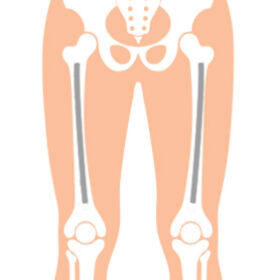 Fully Internal System
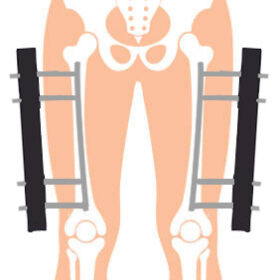 External Device System
 Before After Simulator
 Patient Portal
 Surgery Process
 Success Stories
 LL Surgery Packages
 Our Doctor
 Our Team
 Our Mission
 About Us
 Patient Care Guides
 Affiliate Program
 Activities in Istanbul


LON vs Precice 2 vs Fitbone: How to Choose by Comfort, Risk, Accuracy, and Total Treatment Burden
The best limb-lengthening method is usually not the one with the slickest reputation. It is the one that fits your bone anatomy, your goals, your tolerance for daily treatment hassle, and your surgeon’s ability to execute it well.
That is why so many patients search for LON vs Precice 2 vs Fitbone. They are not just comparing devices. They are trying to answer a more personal question: What will this actually feel like, how risky is it, and how much of my life will treatment take over?
Here is the plain-English answer up front: fully internal nails often reduce the burden of living with an external frame, but internal does not mean easy, painless, or risk-free. LON can still make sense in selected cases. And between Precice 2 and Fitbone, there is no honest one-size-fits-all winner.
If you need broader background first, see our guide to internal vs external limb lengthening methods. If you are already narrowing down to two methods, you can also read our LON vs Precice 2 comparison.
Quick answer
For many straightforward candidates, fully internal lengthening nails are usually easier to live with than LON because they avoid prolonged frame wear and pin-site problems. But LON is not automatically obsolete, and Precice 2 vs Fitbone is usually a case-selection decision more than a brand contest.At a glance: LON vs Precice 2 vs Fitbone
For skimmers, here is the shortest useful version.
LON
A hybrid method: an external fixator is used together with an internal nail. Often chosen when anatomy, technical limits, or cost considerations make a fully internal plan less suitable.Precice 2
A fully internal magnetic lengthening nail. Popular for patients who want to avoid frame wear and who are suitable candidates for an internal device.Fitbone
A fully internal motorized lengthening nail controlled externally. Similar overall goal to Precice 2: controlled internal lengthening without an external frame.The fastest tradeoff summary is this:
- LON usually means more day-to-day burden because an external frame is part of the process.
- Precice 2 and Fitbone usually feel more tolerable in daily life because the lengthening device is internal.
- LON may still be chosen when anatomy, deformity pattern, bone size, age, or planning factors make a fully internal nail less ideal.
- Between Precice 2 vs Fitbone, the practical difference is usually smaller than patients expect. The big questions are fit, availability, surgeon experience, and your specific bone.
How each method works in plain English
LON = external fixator plus intramedullary nail
LON stands for lengthening over nail. In simple terms, a metal rod sits inside the bone while an external frame helps control the distraction phase. The frame is attached to the bone through pins or wires that pass through the skin. As lengthening progresses, the frame does the active work of gradual separation while the nail provides internal support.
That hybrid design is why LON can work well in some situations. It also explains why it carries external-fixator hassles that fully internal nails avoid.
Precice 2 = fully internal magnetic nail with an external controller
Precice 2 is placed inside the bone. Lengthening happens through a magnetic mechanism inside the nail, activated by an external remote controller used from outside the body. Nothing sticks out through the skin during routine lengthening.
That does not make treatment simple. You still need surgery, bone healing, close monitoring, physical therapy, and patience. But it usually changes the everyday experience in a big way because there is no frame to wear.
Fitbone = fully internal motorized nail with an external controller set
Fitbone is also an internal lengthening nail. Instead of a magnetic drive, it uses an internal motorized system that is activated with an external controller setup. The goal is the same as with Precice 2: gradual, controlled internal lengthening while avoiding prolonged use of an external frame.
If you are searching for the difference between LON Precice 2 and Fitbone, this is the core distinction: LON is a hybrid external-plus-internal method, while Precice 2 and Fitbone are fully internal lengthening systems.
LON patients usually notice frame care, pin-site cleaning, bulk, skin irritation, and the practical inconvenience of living with external hardware.
Precice 2 and Fitbone patients usually notice the internal nature of the system first: clothing is easier, sleeping and sitting can be easier, and there is no pin-site routine. That said, internal nails can still cause pain, tightness, muscle guarding, and the same need for disciplined rehab.
Surgeons usually focus less on marketing labels and more on anatomy, canal size, alignment goals, bone segment, planned amount of lengthening, prior surgeries, deformity pattern, and whether an internal implant is technically appropriate.
The real win is not picking the trendiest method. It is choosing the method that gives predictable lengthening, manageable complications, good alignment, and a recovery process you can realistically complete.
LON vs internal lengthening nails
This is the comparison that matters most for most patients.
LON and internal nails can both achieve lengthening. The bigger difference is the treatment experience around that lengthening.
Why external-frame wear changes daily life
Any method involving an external frame changes ordinary routines. Clothing gets harder. Sleep can be awkward. Pin-site care becomes part of life. Skin irritation is common. Showering, mobility, and sitting comfort may all feel more complicated. Many patients also find the visual presence of a frame emotionally draining.
That is why LON is often judged not just by whether it works, but by how much extra friction it adds to everyday life.
Why internal nails usually reduce frame-related burden
Fully internal nails remove the most obvious burden: external hardware crossing the skin for weeks or months. That usually means fewer pin-site problems, less visible hardware, and a smoother daily routine. For many suitable femur cases, that alone can be a major quality-of-life advantage.
Internal nails can also offer more controlled distraction in appropriate cases. But the main patient-facing benefit is often simpler: they usually feel less intrusive.
Why LON may still be chosen in selected cases
Calling LON outdated is too simplistic. It may still be used when:
- Bone anatomy does not suit a particular internal nail.
- The medullary canal is too small or other implant constraints exist.
- The case is more complex than a straightforward cosmetic lengthening.
- The surgeon believes a hybrid plan offers better control for that specific problem.
- Cost structure or implant access affects what is realistic.
In other words, LON vs internal lengthening nails is not a morality play where one side is modern and the other is wrong. It is a selection problem.
Comfort and infection risk
This is where patient priorities become very real. Most people asking about LON vs Precice 2 vs Fitbone are really asking, “What will hurt less, what will irritate me less, and what is less likely to create day-to-day problems?”
Where LON carries extra burden
Pin-site infection risk, skin irritation, frame discomfort, more visible scarring, and the general inconvenience of caring for hardware that passes through the skin.Where internal nails help
No prolonged external frame, no daily pin-site care, easier clothing and hygiene, and often a more tolerable day-to-day experience for suitable patients.Pin-site infection and external-fixator irritation risk with LON
Because LON uses pins or wires that cross the skin, there is built-in exposure to pin-site irritation and infection. Not every pin problem becomes serious, but the risk is part of the method itself, not a rare side note.
There can also be soreness where pins enter, frame-related soft tissue irritation, and more visible scars. Even when everything is going well, the frame often remains the hardest part of the patient experience.
Why internal nails often feel more tolerable day to day
Precice 2 and Fitbone avoid many of the annoyances tied to external fixation. Patients often value that more than any technical feature on a brochure. Being able to dress more normally, move without frame bulk, and skip pin-site care can make recovery feel more manageable.
That does not mean fully internal nails are comfortable in an ordinary sense. Lengthening still stretches muscle, nerve, fascia, and skin. Physical therapy can still be demanding. Tightness and pain can still be significant.
Internal nails still carry surgical, bone, and device-related risks
It is important not to replace one myth with another. Internal nails avoid some external-fixator complications, but they still carry real risks, including:
- Problems with distraction control or device function
- Pain and stiffness during the lengthening phase
- Delayed bone healing or uneven regenerate formation
- Joint contracture risk if therapy falls behind
- Alignment issues, bone complications, or need for unplanned procedures
- The likelihood of another surgery later for nail removal in many cases
So if your main question is whether Precice 2 or Fitbone is “safer” than LON, the honest answer is more nuanced: internal nails usually reduce pin-site and frame-related exposure, but they do not eliminate meaningful complications.
Precice 2 vs Fitbone
Once you decide that a fully internal strategy may fit you, the next question becomes Precice 2 vs Fitbone.
The biggest mistake here is assuming this is like comparing phones or cars. It is not. Both are internal systems designed to achieve controlled lengthening. The difference is not that one is universally good and the other is universally bad. The difference is mostly in drive system design, logistics, and case suitability.
Different drive systems
Precice 2 uses a magnetic mechanism activated by an external controller. Fitbone uses an internal motorized system controlled by an external set. That is a real mechanical difference, but many patients overestimate how much it changes the overall treatment journey.
What usually matters more is whether the implant fits your anatomy and whether your surgical team is highly experienced with that system.
Same basic goal
Both methods aim to provide gradual, predictable, fully internal lengthening. Both try to reduce the burden associated with external fixation. Both still depend on careful planning, accurate surgery, close monitoring, and serious rehab commitment.
No universal brand winner
The evidence does not support a simple claim that one internal brand is universally superior for every patient. Some cases lean one way because of bone dimensions, target segment, implant options, or practical availability. In real clinical decision-making, the “best” choice is often the one your anatomy and treatment plan support most reliably.
So when patients ask which is better, Precice 2 or Fitbone, a better question is this: which system is the better fit for my bone, my goals, and my surgeon’s most reproducible technique?
Accuracy, recovery, and total treatment burden
This is where the comparison becomes useful instead of promotional.
Patients often focus on implant price, but total treatment burden is broader than upfront device cost. It includes how many procedures you may need, how accurate the distraction is, how much follow-up is required, how hard rehab will be, how much time you spend dealing with hardware, and how much the process disrupts daily life.
Why accuracy and precision matter
Limb lengthening is not just about gaining millimeters. It is about gaining them gradually, symmetrically, and without creating avoidable alignment or joint problems. Better control can translate into a smoother course, fewer corrections, and less treatment stress.
Comparative data in suitable femur cases suggest that internal magnetic nails can offer better accuracy and precision than LON while also reducing frame-related problems. Some comparisons have also reported fewer surgeries and faster bone union with internal nails in selected settings. But that does not mean every internal nail always outperforms LON in every patient or every outcome.
The key point is practical: if a fully internal option fits your case well, the overall burden may be lower than the sticker price alone suggests.
Side-by-side decision matrix
| Decision factor | LON | Precice 2 | Fitbone |
|---|---|---|---|
| Mechanism | Hybrid: external fixator plus internal nail | Fully internal magnetic nail | Fully internal motorized nail |
| Daily comfort | Usually the most cumbersome because of frame wear | Often easier day to day than frame-based methods | Often easier day to day than frame-based methods |
| Infection exposure | Pin-site infection risk is built in | Avoids pin-site risk but still has surgical and implant-related risks | Avoids pin-site risk but still has surgical and implant-related risks |
| Accuracy and control | Can work well, but frame-related variables increase burden | Strong controlled internal lengthening in suitable cases | Strong controlled internal lengthening in suitable cases |
| Visible hardware | Yes, during frame phase | No external frame during routine lengthening | No external frame during routine lengthening |
| Likely procedures | May involve multiple treatment steps including frame removal; nail removal may also be needed later | Insertion surgery plus follow-up and often later nail removal | Insertion surgery plus follow-up and often later nail removal |
| Rehab burden | High, with added frame management | Still substantial, but usually without frame-management burden | Still substantial, but usually without frame-management burden |
| Candidacy limits | May be useful when an internal nail is not the best fit | Depends on anatomy, segment, implant fit, and planning | Depends on anatomy, segment, implant fit, and planning |
| Best shorthand use case | When hybrid treatment solves a problem internal nails do not solve as well | When a fully internal magnetic option fits the case well | When a fully internal motorized option fits the case well |
Procedures, follow-up, rehab intensity, and burden matter more than implant price alone
A cheaper implant is not automatically the lower-cost journey. If one option increases clinic visits, hardware care, discomfort, missed work, secondary procedures, or daily stress, the total burden may be higher even if the initial device cost is lower.
This is one reason internal nails are often preferred in suitable cases: not because they magically remove risk, but because they can reduce the treatment friction surrounding the risk.
How to actually choose
If you are deciding among these methods, focus on these questions in consultation:
- Am I truly a candidate for a fully internal nail? Bone diameter, limb segment, alignment, deformity, prior surgeries, and amount of planned lengthening all matter.
- What is the expected total burden, not just the device label? Ask about procedures, frame time if any, follow-up schedule, therapy intensity, likely time away from normal routine, and later implant removal.
- What complications are most relevant in my case? For one patient that may be pin-site issues. For another it may be contracture risk, bone healing, or implant fit.
- Which method does the surgical team perform most reliably for cases like mine? Experience with your exact type of case matters more than generic marketing claims.
- Am I prepared for rehab? No device can substitute for disciplined physical therapy and close monitoring.
That is the real framework behind LON vs Precice 2 vs Fitbone. The best option is the one that balances biology, mechanics, and your real-life ability to get through treatment successfully.
FAQ: choosing between LON, Precice 2, and Fitbone
There is no universal winner. For many suitable patients, fully internal nails are preferred because they avoid prolonged external-frame wear and pin-site issues. But LON can still be the better choice in selected cases where anatomy, technical goals, or planning factors make a hybrid method more appropriate.
If you are asking which limb lengthening method is better LON Precice 2 or Fitbone, the best answer is: the one that best fits your anatomy, indication, and surgeon’s most reliable treatment plan.
LON is still used. It is not the first choice for every straightforward candidate, especially when a fully internal nail is a good fit. But it remains relevant for some patients because it can solve problems that are not always best handled with an internal-only system.
They usually reduce exposure to external-fixator problems such as pin-site infection and frame irritation. That can make them feel safer from a patient comfort standpoint. But they still involve surgery, bone healing, rehab demands, and device-related risks, so they should not be described as risk-free or automatically safer in every respect.
Often it means a more manageable day-to-day experience because there is no external frame and no pin-site care. But lengthening still stretches tissues, can still hurt, and still requires serious physical therapy. Easier than a frame-based method does not mean easy in absolute terms.
The choice usually depends on anatomy, bone size, limb segment, lengthening goals, implant fit, logistics, and surgeon familiarity with the system. Evidence does not show that one internal brand is universally superior for all patients, so case selection matters more than brand loyalty.
Bottom line
The real lesson of LON vs Precice 2 vs Fitbone is that there is no shortcut answer that works for everyone.
LON can still be useful when a hybrid strategy suits the anatomy or treatment problem. Precice 2 and Fitbone usually lower the burden of everyday treatment by avoiding prolonged external-frame wear. Between the two internal systems, the practical differences are often smaller than the differences created by your anatomy, your goals, and your surgeon’s experience.
If you want the smartest way to compare these options, do not ask which name sounds most advanced. Ask which plan gives you the best balance of comfort, infection exposure, accuracy, recovery demands, and total treatment burden for your specific case.
That is how the best method is chosen in real life.
Are you interested in limb lengthening surgery?
We would be happy to assist you.
Go to homepage Limb Lengthening Process Gallery