


 中文 (中国)
 العربية
 Русский
 Deutsch
 Français
 Italiano
 Español
 日本語
日本語 한국어
한국어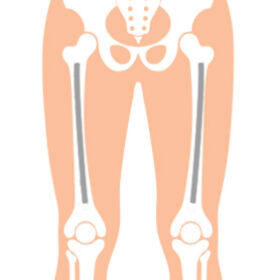 Fully Internal System
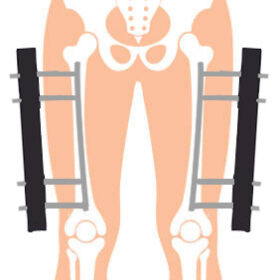 External Device System
 Before After Simulator
 Patient Portal
 Surgery Process
 Success Stories
 LL Surgery Packages
 Our Doctor
 Our Team
 Our Mission
 About Us
 Patient Care Guides
 Affiliate Program
 Activities in Istanbul


Comparison of Limb Lengthening Methods: LON vs. Precice 2 vs. Fitbone
Introduction
Choosing the right limb lengthening method is crucial for achieving your height goals and ensuring a smooth recovery process. At Become Taller Clinic, we offer three advanced limb lengthening methods: Lengthening Over Nail (LON), Precice 2, and Fitbone. This page provides a detailed comparison of these methods to help you make an informed decision.
Comparison Table
To give you a quick overview of the differences between the LON, Precice 2, and Fitbone methods, we’ve created the following comparison table:
| Feature | LON Method | Precice 2 Method | Fitbone Method |
|---|---|---|---|
| Overview | Combines external and internal fixation | All-internal, magnetically controlled lengthening | All-internal, motorized intramedullary nail with external power transmission |
| Procedure | Involves external fixator and internal rod | Utilizes a telescopic nail controlled by an external remote | Motorized nail controlled by external transmitter placed over receiver under skin |
| Comfort | Less comfortable due to external fixator | More comfortable, no external devices | Very comfortable, fully internal with no external fixators |
| Infection Risk | There is a possibility that it is due to the external fixator. | No infection due to all-internal approach | Minimal risk, fully internal system with no transcutaneous contact |
| Cost | More affordable | Higher due to advanced technology | Higher due to advanced motorized technology |
| Precision | Manual adjustments, less precise | Highly precise, magnetically controlled | Highly precise, complete control of distraction amount, speed, and rate |
| Recovery Time | Longer, due to external fixator | Shorter, all-internal method | Shorter, all-internal method with early mobility |
| Scarring | More visible due to external fixator pins | Minimal scarring | Minimal scarring, only four small incisions |
| Maximum Lengthening | Varies based on individual case | Varies based on individual case | Up to 8 cm in femur, up to 7 cm in tibia |
| Technology | Traditional mechanical | Magnetic control system | Motorized system with external power transmission |
| Ideal Candidates | Cost-conscious, can manage external fixator | Seeking comfort, willing to invest in advanced method | Seeking fully internal system, prefer minimal scarring and early mobility |
FAQs
Q: How long does the lengthening process take with each method?
A: The lengthening process can vary, but typically it takes several months for all three methods. The Precice 2 and Fitbone methods may offer a slightly faster recovery due to the absence of an external fixator.
Q: Is one method safer than the other?
A: All three methods are safe when performed by experienced surgeons. Precice 2 and Fitbone have lower infection risks due to their fully internal approach, while LON has a proven track record with many successful cases.
Q: How much does each method cost?
A: The LON method is more affordable, while the Precice 2 and Fitbone methods are more expensive due to advanced technology. For pricing, please contact our support team.
Q: Can I walk during the lengthening process?
A: Yes, with Fitbone you can walk with support (walker or crutches) from day one after surgery. Precice 2 also allows early mobility. LON requires more careful management due to the external fixator.
Lengthening Over Nail (LON) Method
Overview:
- The LON method combines both external and internal fixation. It involves the insertion of a metal rod inside the bone and the use of an external fixator.
Procedure:
- Initial surgery to insert the internal rod and external fixator.
- Gradual lengthening process through the external fixator.
- Removal of the external fixator once the desired length is achieved, leaving the internal rod to stabilize the bone.
Advantages:
- Stability: The internal rod offers additional support, reducing the risk of deformities.
- Cost-effective: Generally less expensive than the Precice 2 and Fitbone methods.
- Widely used: Proven track record with many successful cases.
Disadvantages:
- Discomfort: The external fixator can be uncomfortable and may cause scarring.
- Infection risk: Risk of infection due to the external device.
- Longer recovery: The presence of an external device can extend the recovery period.
Ideal Candidates:
- Patients looking for a cost-effective solution.
- Those who can manage the discomfort and maintenance of an external fixator.
Popularity:
- Most people prefer the LON method due to its cost-effectiveness and proven success rate.
Precice 2 Method
Overview:
- The Precice 2 method is an all-internal limb lengthening technique that utilizes a motorized, telescopic nail inserted into the bone. Lengthening is controlled magnetically via an external remote control.
Procedure:
- Initial surgery to insert the telescopic nail.
- Gradual lengthening process controlled by an external remote.
- No external fixator is used, resulting in a more comfortable experience.
Advantages:
- Comfort: No external devices, leading to a more comfortable and aesthetically pleasing experience.
- Precision: Magnetically controlled lengthening allows for precise adjustments.
- Lower infection risk: Reduced risk of infection due to the absence of an external device.
- Faster recovery: All-internal approach often leads to quicker recovery times.
Disadvantages:
- Cost: More expensive due to advanced technology and equipment.
- Eligibility: Not suitable for all patients, depending on bone quality and medical history.
Ideal Candidates:
- Patients seeking a more comfortable and less invasive experience.
- Those willing to invest in a more advanced and precise method.
Fitbone Method
Overview:
- The Fitbone method is an advanced all-internal limb lengthening technique developed in Germany. It uses a fully internal motorized nail that is controlled externally through power transmission, eliminating pin-site infections and minimizing scarring.
Procedure:
- Initial surgery to implant the motorized intramedullary nail and a receiver under the skin.
- After a rest period (typically 7 days), gradual lengthening process controlled by placing an external transmitter over the implanted receiver.
- Patient activates lengthening by pressing a button on the control device.
- No external fixator is used, resulting in a comfortable experience with minimal scarring.
Advantages:
- Fully internal system: No external fixators, eliminating risk of pin-site infections.
- Minimal scarring: Only four small incisions with discreet cosmetic result.
- Precision: Complete control of distraction amount, speed, and rate, which can be modified according to bone healing and rehabilitation needs.
- Early mobility: Patients can walk with walker or crutches from day one after surgery.
- Everyday comfort: Clothing, hygiene, and movement are less restricted.
- Deformity correction: Allows axial and torsional corrections as part of limb lengthening using reverse planning method.
- Bidirectional control: The nail can lengthen and, under surgeon guidance, shorten if medically necessary.
Disadvantages:
- Cost: More expensive due to advanced motorized technology.
- Receiver requirement: The small receiver under the skin must be used correctly for the system to work properly.
- Weight-bearing limitations: Full, unassisted walking is possible only after the bone has gained enough strength.
- Commitment required: Following postoperative guidelines, daily physiotherapy and exercises are necessary.
Ideal Candidates:
- Patients seeking a fully internal solution without external frames.
- Those who prefer minimal scarring and early mobility.
- Patients ready to commit to physiotherapy, regular follow-ups, and daily exercises.
- Those seeking both medical safety and a more natural daily life during treatment.
Technology:
- Developed by Prof. Dr. Dr. Rainer Baumgart in Germany, launched in 1997.
- Uses a motorized system with no battery; powered by electricity transmitted through external induction coil.
- Available in three different lengths allowing distraction distances of 40 mm, 60 mm, or 80 mm.
- Can achieve up to 8 cm lengthening in the femur and up to 7 cm in the tibia.
Contact us
Our team at Become Taller Clinic is here to support you every step of the way.
Chat via WhatsApp Send Mail